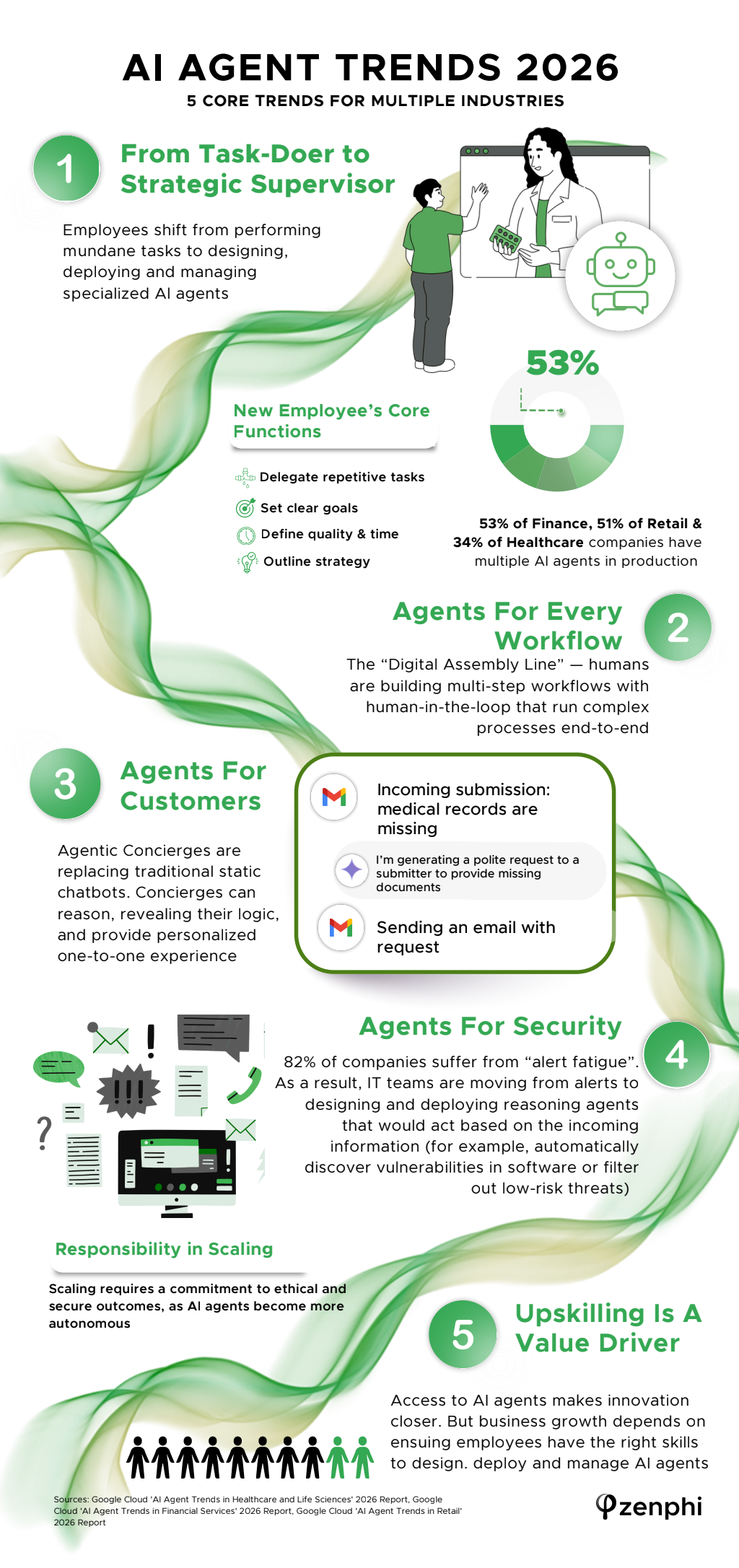
AI agents are becoming a core part of business operations. In 2026, these systems are moving past simple task support and into roles that involve planning, execution, and decision support. Companies are using them to improve speed, reduce manual work, and handle growing data demands.
From Single Tasks to End-to-End Workflows
Earlier tools focused on completing one task at a time. AI agents now manage full workflows. They can gather data, analyze it, and take action based on results. This allows businesses to reduce delays between steps.
For example, an agent can review incoming requests, prioritize them, and assign tasks without manual input. This helps teams focus on higher-value work while routine processes run in the background.
As a result, operations become more consistent and less dependent on constant oversight. This also reduces bottlenecks that slow down productivity.
Stronger Context and Memory
AI agents in 2026 are better at retaining context. They can track past interactions and apply that information to future tasks. This leads to more accurate decisions and fewer repeated instructions.
In customer service, this means fewer handoffs and clearer responses. In internal operations, it supports smoother project tracking and better coordination across teams. Context awareness helps reduce errors and improve overall efficiency. It also allows teams to work with more confidence in the system outputs.
Integration Across Business Systems
Modern AI agents are built to connect with multiple tools. They can move between platforms such as email, project management systems, and data dashboards. This creates a more unified workflow.
AI workflow automation platforms are driving this trend by linking systems together in a structured way. Instead of switching between tools, teams can rely on agents to manage the flow of information. This level of integration supports faster decision-making and reduces manual effort. It also improves visibility across departments.
Human Oversight Remains Essential
Even as AI agents take on more responsibility, human oversight remains important. Businesses are setting clear boundaries for how agents operate. This includes defining approval steps and monitoring outputs.
Teams need visibility into what agents are doing and why decisions are made. Regular review processes help maintain accuracy and reduce risk. A balanced approach allows companies to benefit from automation while maintaining control and accountability.
Focus on Practical Use Cases
Companies are shifting toward practical applications rather than broad experimentation. AI agents are being used in areas such as customer support, finance, and operations where clear value can be measured.
This focus helps organizations see direct results from their investments. It also supports better planning for future use. Clear goals and defined use cases lead to more effective implementation and stronger long-term outcomes.
AI agent trends in 2026 reflect a move toward greater independence, stronger integration, and more practical use. Businesses that adopt these tools with clear structure and oversight can improve efficiency and consistency. As these systems continue to develop, their role in daily operations will likely expand even further. For more information on AI agent trends, feel free to look over the accompanying resource below.