Machine uptime is one of the most important drivers of productivity in manufacturing environments. When equipment runs consistently and efficiently, production schedules stay on track, labor is used effectively, and customer commitments are met on time. Yet maintaining high uptime is rarely simple. Aging machinery, unexpected breakdowns, supply delays, and inconsistent maintenance routines all disrupt workflow. Businesses that prioritize uptime and availability through structured strategies build stronger, more reliable operations.
Building a Foundation With Preventive Maintenance
Consistent preventive maintenance remains one of the most effective ways to increase equipment availability. Scheduled inspections, lubrication, cleaning, and part replacements help machinery operate smoothly and reduce the likelihood of unexpected failures. When performed regularly, preventive maintenance extends equipment lifespan, preserves production quality, and lowers repair costs.
Clear maintenance logs support these efforts by tracking service dates, identifying recurring issues, and documenting interventions. Teams use this information to refine maintenance schedules and adjust resource allocation. Well-maintained machines require fewer emergency repairs and deliver more predictable performance, which contributes directly to higher uptime.
Using Real-Time Data to Monitor Performance
Modern manufacturing facilities rely increasingly on sensors and monitoring tools to gain visibility into equipment conditions. These systems track temperature, vibration, pressure, run time, and other indicators that reveal whether a machine is operating within normal limits. Real-time dashboards help operators spot irregularities quickly and take corrective action before they escalate into failures.
This data-driven visibility supports better decision-making. When operators understand how machines behave under different conditions, they can fine-tune processes, reduce strain, and improve cycle times. Real-time monitoring also highlights performance trends that help maintenance teams anticipate future needs.
Applying Predictive Technology for Faster Intervention
Predictive technology takes maintenance planning to the next level by identifying early warning signs of wear or malfunction. Predictive maintenance services analyze data from sensors, historical performance records, and environmental factors to determine when parts are likely to fail. This approach allows teams to schedule repairs at optimal times rather than reacting to breakdowns that halt production.
The ability to intervene early prevents more extensive damage and reduces downtime. Predictive insights also help facilities optimize spare parts inventories, minimize unnecessary maintenance activities, and schedule service windows around production commitments. As a result, equipment availability improves through smarter planning and reduced disruption.
Empowering Teams With Training and Clear Processes
Human factors play a major role in equipment reliability. Operators must understand correct machine usage, basic troubleshooting, and safety procedures to prevent avoidable breakdowns. Regular training helps teams recognize early signs of malfunction, reducing wear caused by improper operation.
Maintenance teams benefit from standardized processes that outline inspection routines, repair protocols, and communication channels. Clear documentation ensures smoother handoffs between shifts and eliminates guesswork during repairs. Strong collaboration between operators, maintenance personnel, and supervisors helps ensure that issues are reported, addressed, and resolved efficiently.
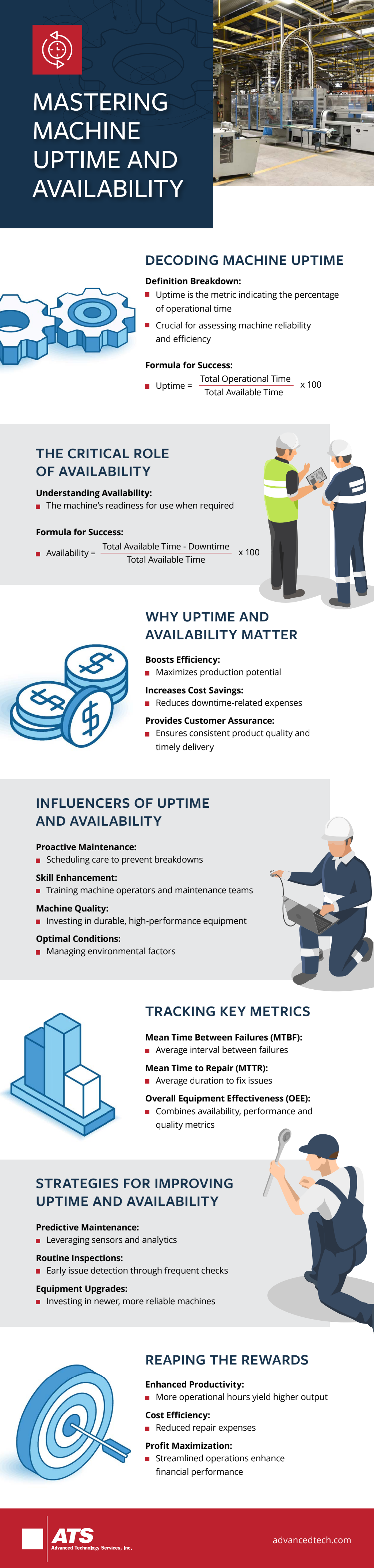
Machine uptime and availability directly influence production performance, costs, and customer satisfaction. By combining preventive care, real-time monitoring, predictive insights, and effective parts management, businesses can keep equipment running confidently. Check out the infographic below for more information.